Teshima, Ogijima and Megijima: The Art Islands Beyond Naoshima (Ferries, Booking and What's Open in 2026)
Kai
Setouchi Notes
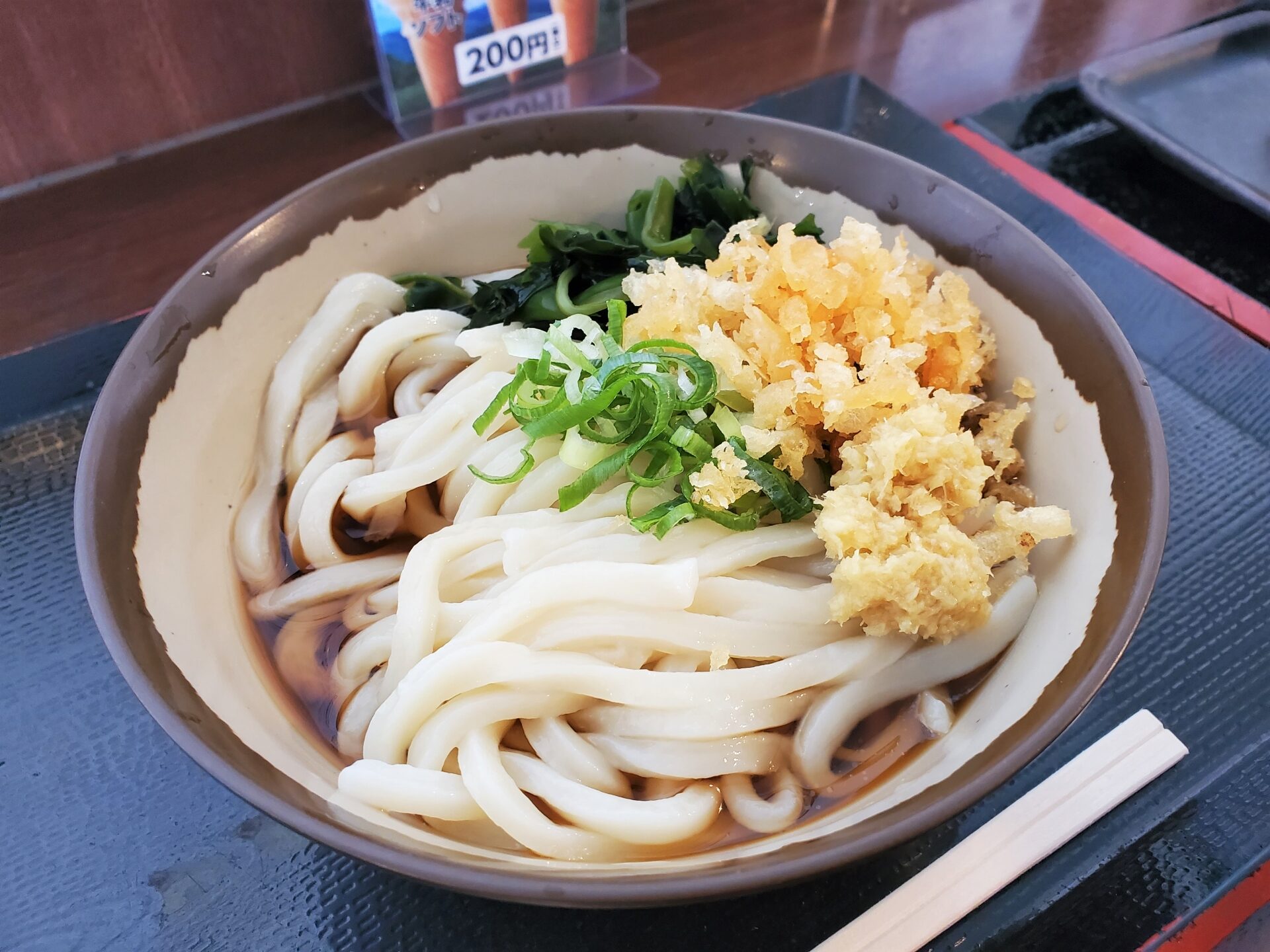
Quick answer: At a Kagawa self-service (セルフ) udon shop, you take a tray, order your udon and size at the counter, add tempura or rice balls yourself, pay, and then pour your own broth and add free toppings. Order a small (1 tama) so you can try several shops in a day. Bring cash, and go before lunchtime ends — many shops close in the early afternoon or when the noodles run out. My favourite is the simplest: kake, noodles in hot broth.
I’ve eaten at self-service udon shops in Kagawa more times than I can count. For a first-time visitor they can be confusing, and every shop works a little differently. Here’s how it works, step by step.
One thing I’d tell every first-timer: the way you order is different at every shop, so don’t worry about getting it wrong. Some owners look gruff and don’t say much, but in my experience most of them are actually kind. Don’t be intimidated — just ask, and they’ll show you what to do. And a personal rule of thumb: the more run-down a shop looks, the better the udon tends to be. Not always, but it’s worth keeping in mind.
Kagawa is Japan’s udon prefecture, and many of its best shops are small, no-frills places that started as noodle factories. Self-service keeps them fast and cheap: a simple bowl often costs only a few hundred yen. Kagawa residents spend, on average, only about ¥550 per udon meal including side dishes.
Shops vary, but this is the most common pattern.
I’ve used both kinds of shop: ones where you warm the noodles and pour the broth yourself, and ones where you order at the counter, pick up tempura and pay at the end. If you’re unsure, just watch the person in front of you and copy them.
Hiya (ひや) means cold and atsu (あつ) means hot. The first word is the noodles, the second is the broth:
| Word | Noodles | Broth |
|---|---|---|
| Hiyahiya (ひやひや) | cold | cold |
| Hiyaatsu (ひやあつ) | cold | hot |
| Atsuatsu (あつあつ) | hot | hot |
| Atsuhiya (あつひや) | hot | cold |
Cold noodles are firmer and chewier; hot noodles are softer.
| Name | What it is |
|---|---|
| Kake (かけ) | Noodles in a light hot broth made from soy sauce and dried sardines (iriko). The basic bowl, and my favourite |
| Kamaage (釜揚げ) | Straight from the boiling pot, not rinsed, with a dipping broth |
| Kamatama (釜玉) | Hot kamaage noodles mixed with raw egg and soy sauce |
| Bukkake (ぶっかけ) | A small amount of strong, concentrated broth poured over (hot or cold) |
| Zaru (ざる) | Chilled noodles on a bamboo tray, with dipping sauce |
| Shoyu (しょうゆ) | Just soy sauce poured over the noodles |
Udon is sold by the tama (玉), one portion of noodles. Usually shō (小, small) = 1 tama, dai (大, large) = 2, and toku (特, extra large) = 3. But the amount per tama varies by shop, so look at the menu board.
Many famous shops are in the countryside, so a car is the easiest way to do an udon crawl. Without one, there are shops near the stations in Takamatsu, and in towns like Kotohira at the foot of Konpira-san. A private “udon taxi” service also takes visitors to shops with a driver who has passed an udon knowledge test (drivers may not speak English).
See Kagawa in 2 Days and Climbing Konpira-san to plan your route.
What does “hiyaatsu” mean?
Cold noodles in hot broth. Hiya is cold, atsu is hot; noodles first, then broth.
How much does Sanuki udon cost?
A simple bowl at a self-service shop is usually a few hundred yen. Kagawa residents spend about ¥550 per udon meal on average, including sides.
Do udon shops take credit cards?
Some do, but many small shops are cash only. Bring coins and small notes.
What time do udon shops close?
Many close in the early afternoon, or as soon as the noodles sell out. Go in the morning or before lunchtime ends.
Udon terms and the self-service steps checked against official Takamatsu City and Japan Tourism Agency information on 24 October 2026.