Hiroshima Airport to Hiroshima City and Miyajima: Bus, Train, Taxi and Rental Car (2026)
Kai
Setouchi Notes
Quick answer: Three expressways link Honshu and Shikoku: the Kobe–Awaji–Naruto Expressway (Kobe to Tokushima, via Awaji Island), the Seto-Chuo Expressway (Okayama to Kagawa, over the Seto Ohashi) and the Nishiseto Expressway, better known as the Shimanami Kaido (Onomichi to Imabari). For a regular car, a typical crossing costs about ¥1,700–3,300 with ETC. Without ETC, you pay roughly double. Use an ETC card, and cross on a weekend if you can: the holiday discount takes off a few hundred yen.
I live in Tokushima and drive around Shikoku, and I’ve crossed the Shimanami Kaido by car many times. If you’re driving to Shikoku, there are two questions to answer: which bridge to take, and how much it will cost. This guide answers both. All toll figures come from the official tables of JB Honshi Kosoku (Honshu-Shikoku Bridge Expressway Company), as of October 2026.
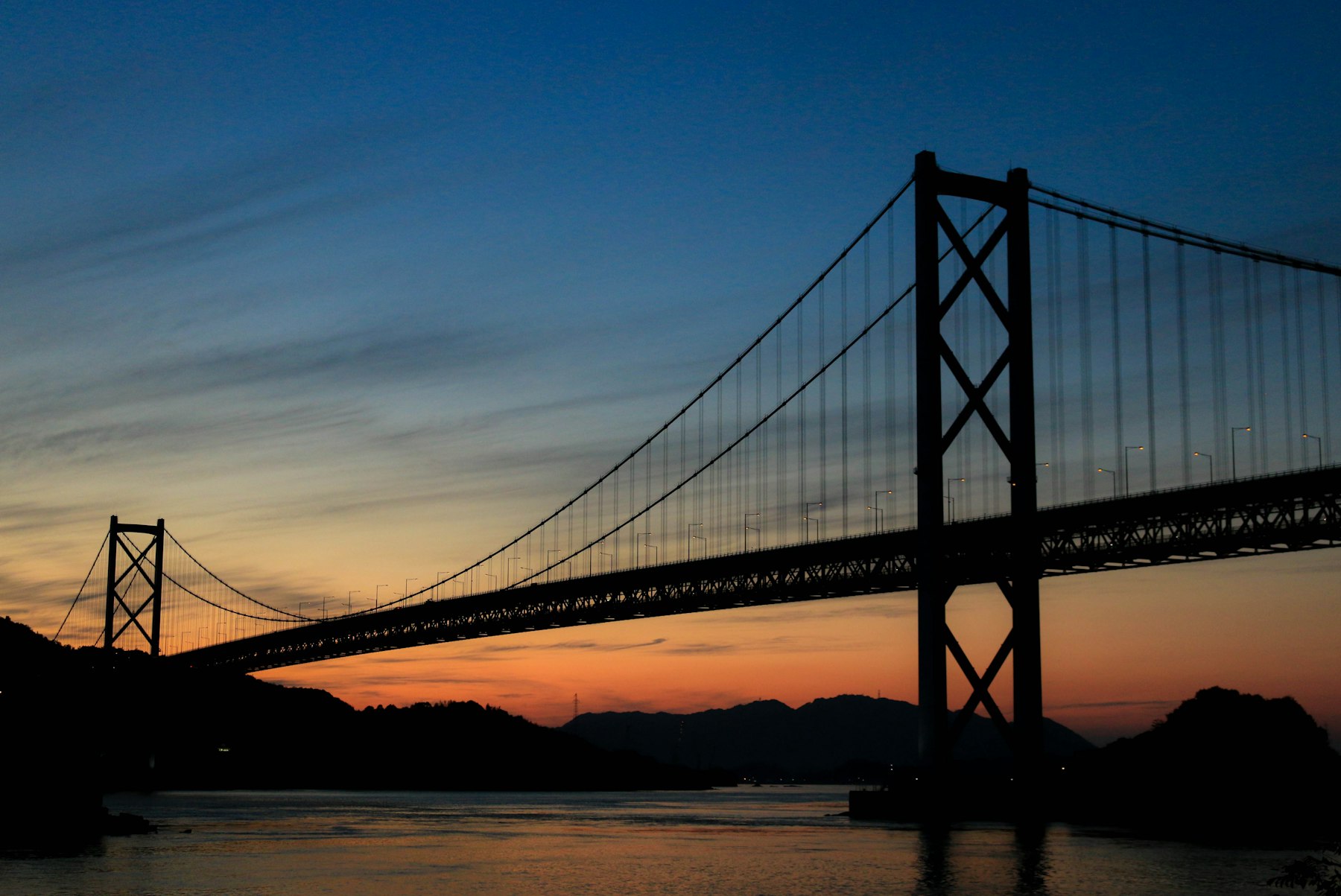
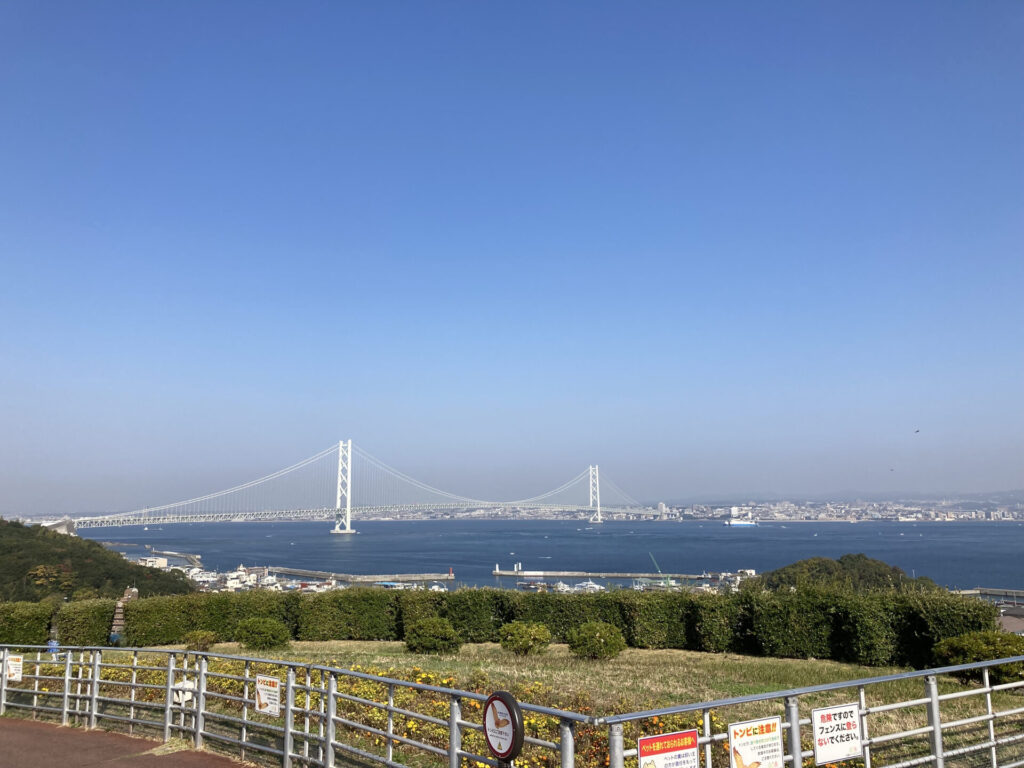
1. Kobe–Awaji–Naruto Expressway (E28) — the eastern route. Leaves Kobe and crosses the Akashi Kaikyo Bridge, one of the longest suspension bridges in the world, to Awaji Island. It runs the length of Awaji, then crosses the Onaruto Bridge over the Naruto Strait (home of the whirlpools) into Tokushima. Best for: Osaka, Kobe or Kyoto to Tokushima, the Iya Valley or southern Shikoku.
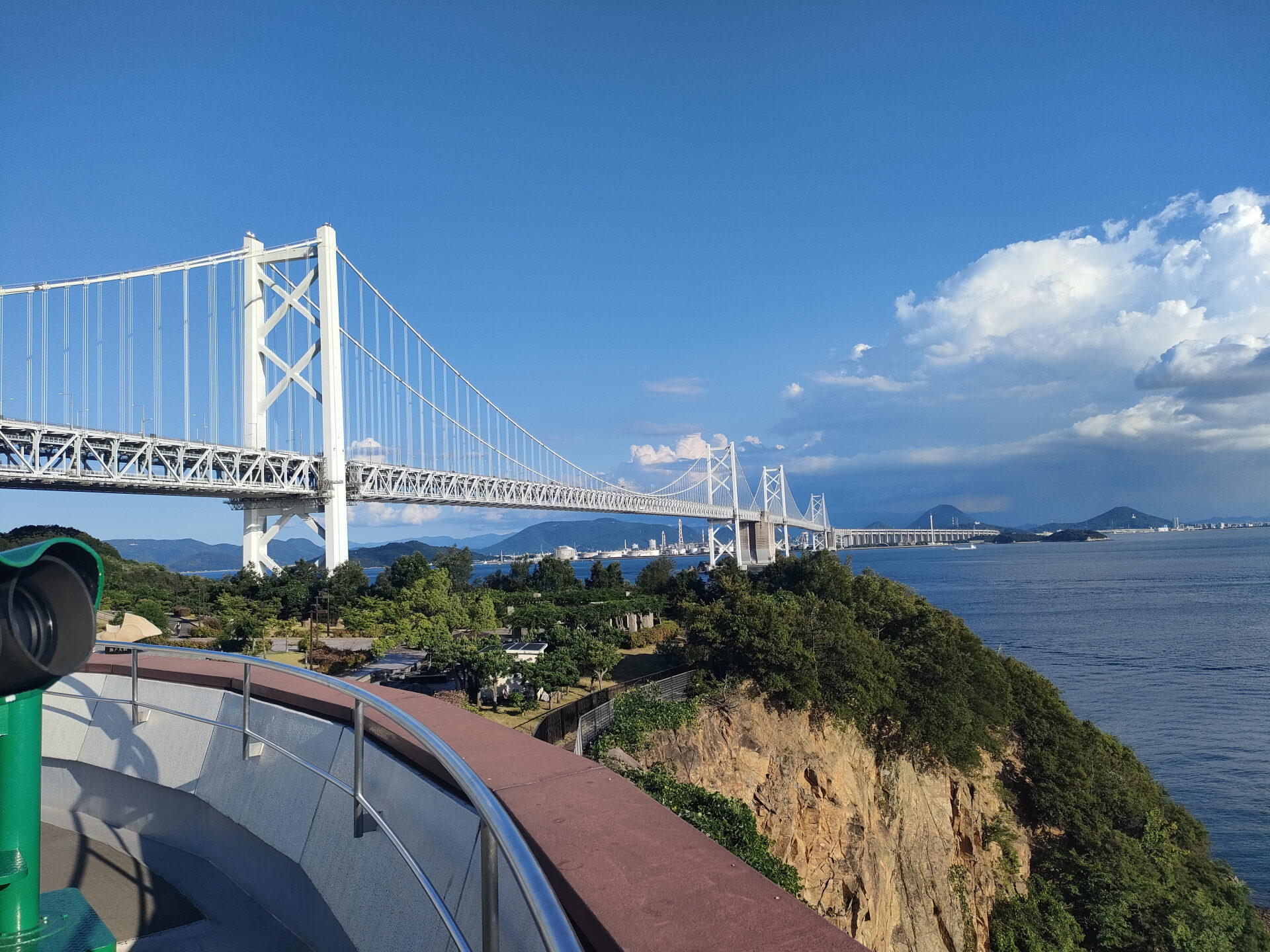
2. Seto-Chuo Expressway (E30) — the central route. Runs from Hayashima in Okayama, past Kojima, over the Seto Ohashi to Sakaide in Kagawa. The Seto Ohashi is a chain of bridges hopping across small islands, with the road on top and the railway on the deck below. There is a parking area on the island of Yoshima, in the middle of the bridges. Best for: Okayama, Kurashiki and the Sanyo region to Takamatsu, Kotohira or anywhere central.
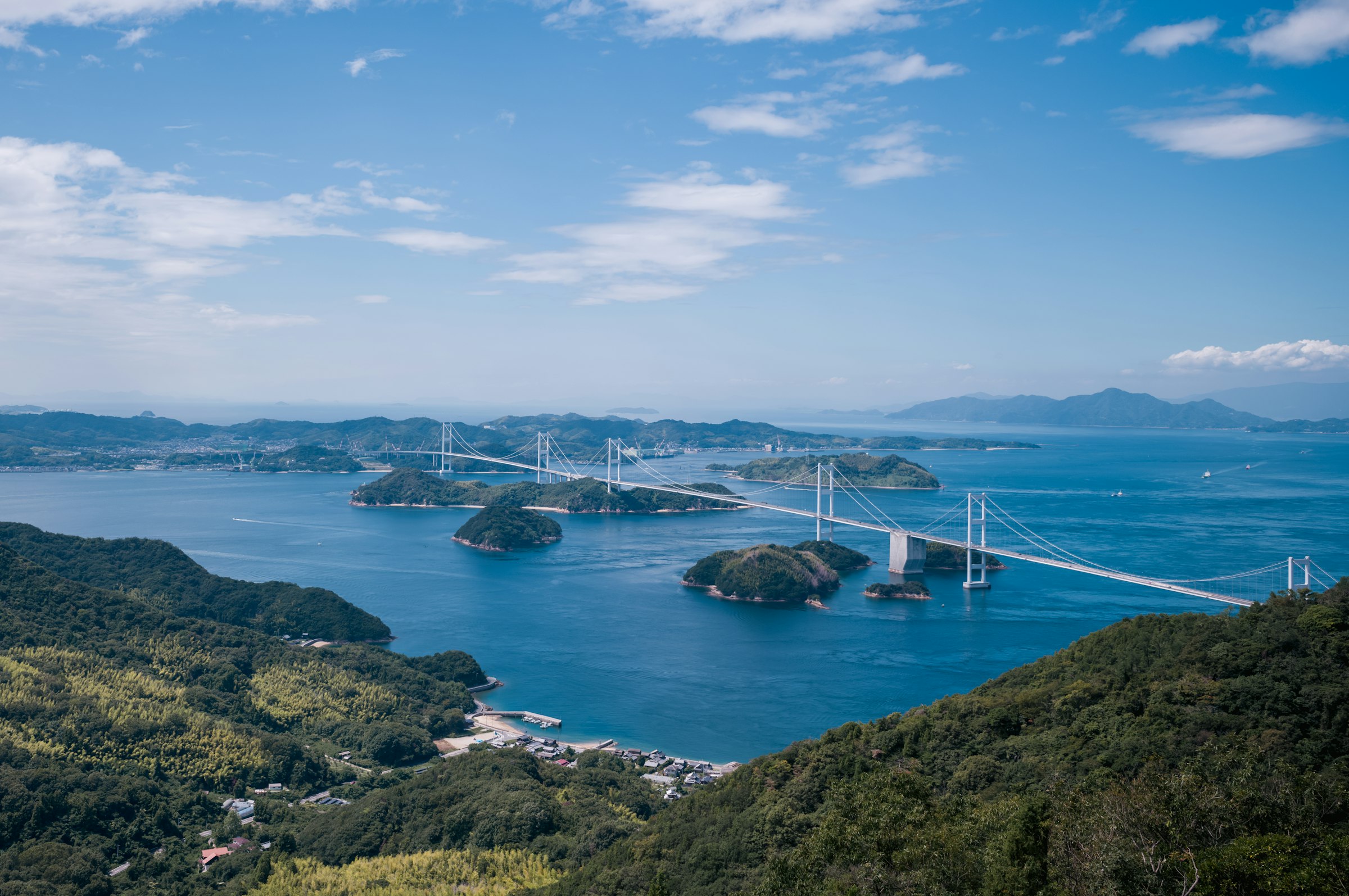
3. Nishiseto Expressway (E76) — the Shimanami Kaido, the western route. About 60 km from Onomichi in Hiroshima to Imabari in Ehime, island-hopping via Mukaishima, Innoshima, Ikuchijima, Omishima, Hakatajima and Oshima. The last crossing is the triple-span Kurushima-Kaikyo Bridge. Best for: Hiroshima to Matsuyama and Ehime, and anyone who wants to stop on the islands along the way.
These are one-way tolls for a regular car (futsū-sha, 普通車), covering only the Honshu–Shikoku expressway section.
| Route | Representative trip | ETC, weekday | ETC, Sat/Sun/holiday | Without ETC (cash) |
|---|---|---|---|---|
| Kobe–Awaji–Naruto | Tarumi IC – Naruto IC | ¥3,110 | ¥2,570 | ¥5,450 |
| Kobe–Awaji–Naruto | Kobe-Nishi IC – Naruto IC | ¥3,340 | ¥2,670 | ¥5,710 |
| Seto-Chuo (Seto Ohashi) | Kojima IC – Sakaide IC | ¥1,800 | ¥1,730 | ¥3,720 |
| Seto-Chuo (Seto Ohashi) | Hayashima IC – Sakaide IC | ¥2,310 | ¥1,990 | ¥4,300 |
| Shimanami Kaido | Nishiseto-Onomichi IC – Imabari-Kita IC | ¥2,800 | ¥2,260 | ¥4,760 |
| Shimanami Kaido | Nishiseto-Onomichi IC – Imabari IC | ¥2,950 | ¥2,310 | ¥4,920 |
Source: JB Honshi Kosoku official toll tables, as of October 2026. Tolls on connecting roads (NEXCO expressways, the Hanshin Expressway, etc.) are charged separately. Check the latest figures before you go.
Two things stand out:
To check any other pair of interchanges, use the official toll tables (English): https://www.jb-honshi.co.jp/english/customer_index/guide/ryokin-table/ — or NEXCO West’s nationwide toll search for a full trip that includes other expressways: https://search.w-nexco.co.jp/en/
On all three routes, regular cars and kei cars using ETC get a holiday discount on Saturdays, Sundays and national holidays. You don’t need to sign up. It is applied automatically when you drive through the ETC lane.
How much you save depends on the trip. From the table above: about ¥540 on Tarumi–Naruto, ¥540 on Onomichi–Imabari-Kita, but only ¥70 on Kojima–Sakaide. One detail: on the Kobe–Awaji–Naruto Expressway, the Akashi Kaikyo Bridge section itself (Tarumi–Awaji) costs ¥910 on weekdays and weekends alike. The discount comes from the Awaji Island and Naruto sections.
The discount is suspended during peak travel periods, including Golden Week, Obon, New Year and three-day weekends. JB Honshi lists the remaining dates as: Nov 21–23, 2026; Dec 26, 2026 – Jan 11, 2027; and Mar 20–22, 2027. On those days the weekday ETC toll applies.
ETC (Electronic Toll Collection) is Japan’s toll system: a small unit in the car reads an ETC card, and you drive through the gate without stopping.
You can drive the bridges without ETC. Use the lane marked 一般 (general) and pay at the booth. JB Honshi accepts cash, credit cards or an ETC card at these booths, but you pay the full cash toll from the table above.
Watch out for two ETC-only interchanges: Higashiura IC on Awaji Island and Mizushima IC in Okayama. A car without ETC should use a different interchange.
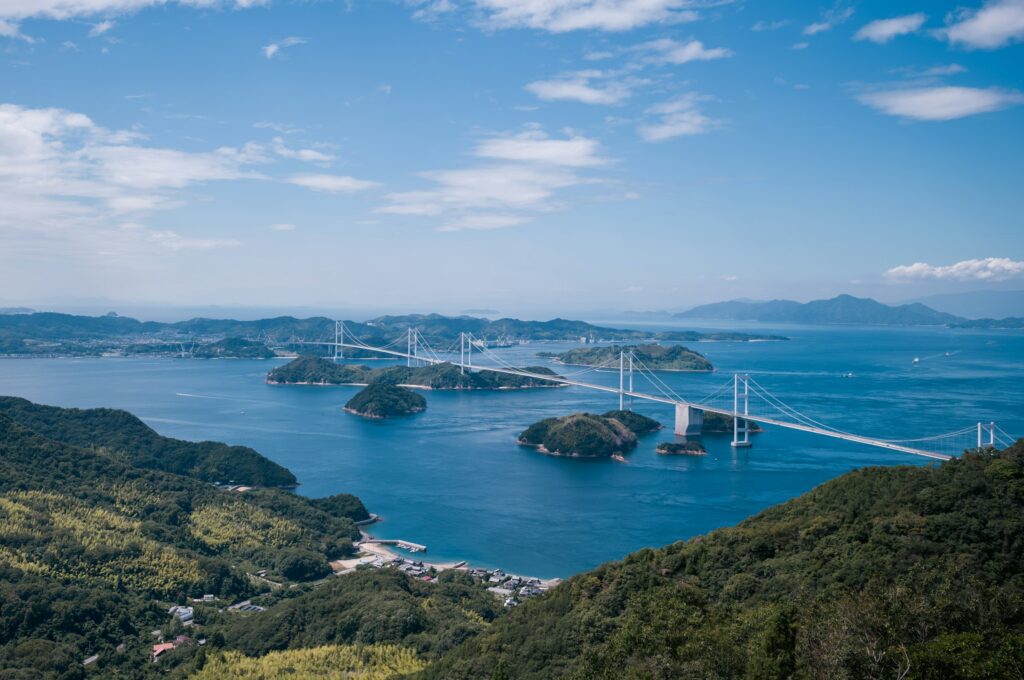
The Shimanami Kaido is the only one of the three routes with paths for bicycles and pedestrians, separate from the expressway.
The Akashi Kaikyo Bridge and the Seto Ohashi are for motor vehicles only.
Kobe-Nishi IC to Naruto IC costs ¥5,710 in cash or ¥3,340 with ETC on weekdays. For the round trip, that is ¥11,420 in cash against ¥6,680 with ETC — a ¥4,740 difference just for renting the ETC card, which usually costs only a few hundred yen (plus the NEXCO tolls between Osaka and Kobe-Nishi, and fuel).
If you are coming from the Osaka–Kobe area, a car ferry can be a relaxing alternative to the bridges, and you get a rest from driving. The main options:
Car fares depend on the length of your car and the season. Check each operator’s official website and compare with the bridge toll plus fuel.
Shikoku is easiest to explore by car, so many visitors come in over one bridge and leave over another.
Is there a discount for driving at night? JB Honshi’s toll guide lists no late-night discount on these bridges. There is a weekday morning/evening discount, but it needs advance registration with ETC Mileage and is paid back later, so it doesn’t help most visitors. The weekend/holiday discount is the one to know.
Can I pay the bridge tolls in cash? Yes, in the general (一般) lane, by cash or credit card. But the cash toll is about twice the ETC toll, and a few interchanges are ETC-only.
Does my expressway pass cover the bridges? The San’in-Setouchi-Shikoku Expressway Pass (SEP) does not. You pay the Honshu–Shikoku bridge tolls separately.
Which bridge is cheapest? The Seto Ohashi. Kojima–Sakaide costs ¥1,800 with ETC on weekdays (as of October 2026).