Hiroshima Oysters: Where and How to Eat Them (and What's Happening in 2026)
Kai
Setouchi Notes
Quick answer: For comfortable sightseeing, April–May and late October–November are the safest bets. For atmosphere, August is my favourite: Awa Odori in Tokushima, Yosakoi in Kochi and summer evenings by the sea — but it’s hot (around 33 °C) and you must book early. Avoid the rainy season (early June to mid-July) and typhoon peak (September) if your plans can’t move.
Setouchi — the region around the Seto Inland Sea, from Hiroshima to Shikoku — has a mild climate. Takamatsu is one of the driest cities in Japan, and snow is rare on the coast. But the seasons still make a big difference to your trip. I live in Tokushima, have family in Hiroshima, and have been to the region’s big festivals and autumn-leaf spots myself. Here’s how the year works.
| Month | Weather (Hiroshima high/low) | Highlights | Watch out for |
|---|---|---|---|
| Jan | 10 °C / 2 °C | Quiet, oysters (supply permitting) | New Year closures (1–3 Jan) |
| Feb | 11 °C / 2 °C | Quiet, fresh Naruto wakame | Cold evenings |
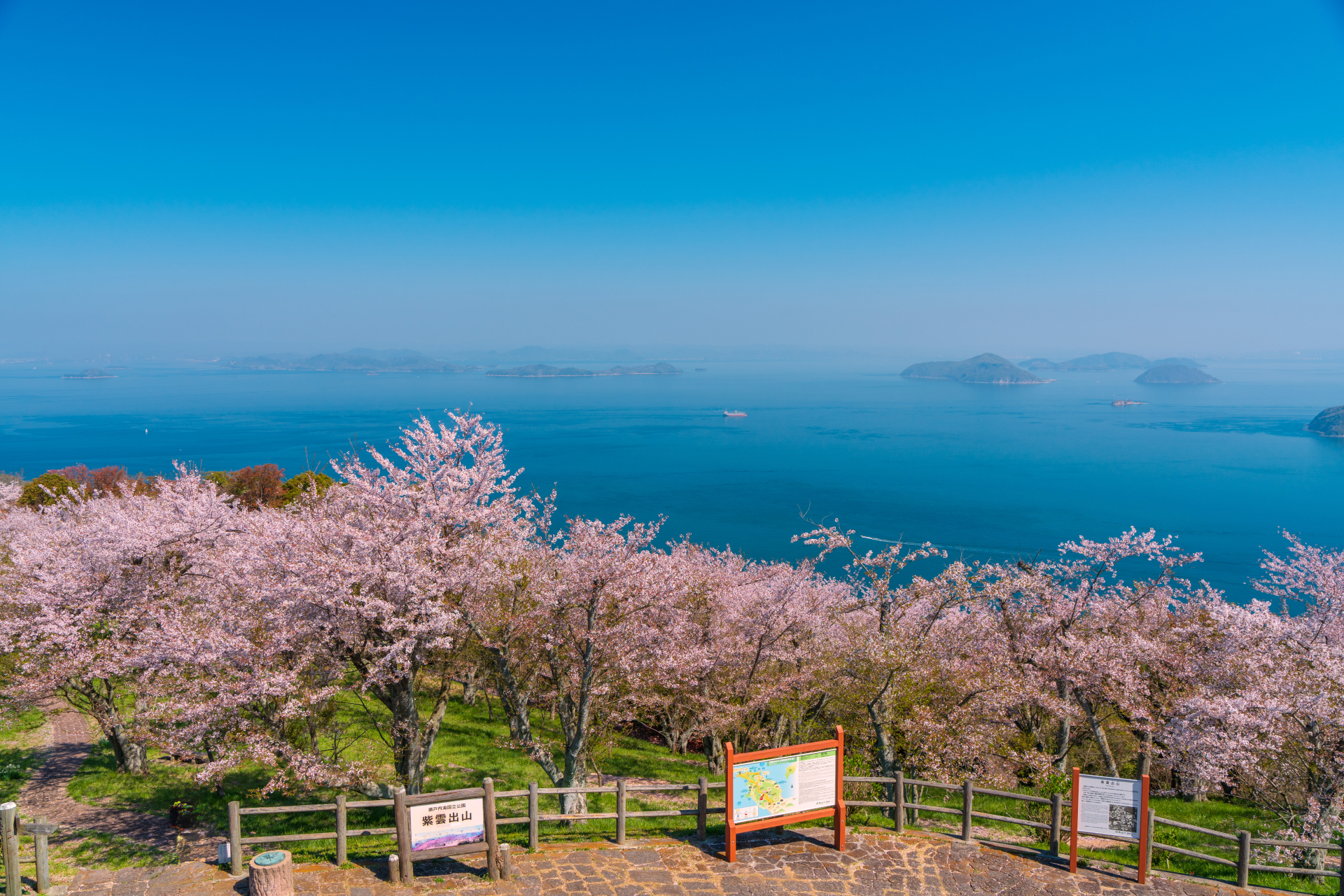
| Mar | 15 °C / 5 °C | Cherry blossoms start at month’s end | Weather can swing |
| Apr | 20 °C / 10 °C | Cherry blossoms, castle festivals | Golden Week crowds from 29 Apr |
| May | 24 °C / 15 °C | Hiroshima Flower Festival (3–5 May), cycling | Golden Week crowds (to 5 May) |
| Jun | 27 °C / 20 °C | Green landscapes | Rainy season |
| Jul | 31 °C / 24 °C | Beaches open, Kangensai on Miyajima | Rainy season until mid/late July; heat |
| Aug | 33 °C / 25 °C | Awa Odori, Yosakoi, Peace Ceremony | Heat, Obon crowds, typhoons |
| Sep | 29 °C / 21 °C | Fewer crowds | Typhoon peak |
| Oct | 24 °C / 15 °C | Comfortable, cycling | Late typhoons possible |
| Nov | 18 °C / 9 °C | Autumn leaves | Popular weekends busy |
| Dec | 12 °C / 4 °C | Late autumn leaves, oysters | Short days |
Temperatures are Japan Meteorological Agency averages (1991–2020) for Hiroshima. Takamatsu, Matsuyama and Tokushima are within about a degree.
The rainy season (tsuyu) normally runs from about 5–6 June to 17–19 July in Shikoku and the Chugoku region, though dates vary a lot by year. It doesn’t rain all day every day, but it’s grey and humid, and heavy rain can close mountain roads. I’d avoid it if you can choose your dates, especially if you’re planning to drive in the mountains. See Driving in rural Shikoku. Caught by the rain in Hiroshima? See Rainy Day in Hiroshima.
This is my favourite time of year here, because the region comes alive:
The catch: it’s hot and humid (daily highs around 32–33 °C), and Obon (around 13–16 August) is the busiest travel time of summer. Rooms in Tokushima during Awa Odori sell out early. Drink plenty of water and plan sightseeing for mornings and evenings.
Typhoon season runs from about July to October, peaking in August and September; September has the most typhoons reaching Japan’s main islands. When one comes, ferries stop, bridges may close to bikes or in strong wind, and outdoor plans are off for a day or two. Southern Tokushima and Kochi, facing the Pacific, get the most rain — September is Tokushima’s wettest month. If you travel in September, keep your plans flexible and watch the forecast.
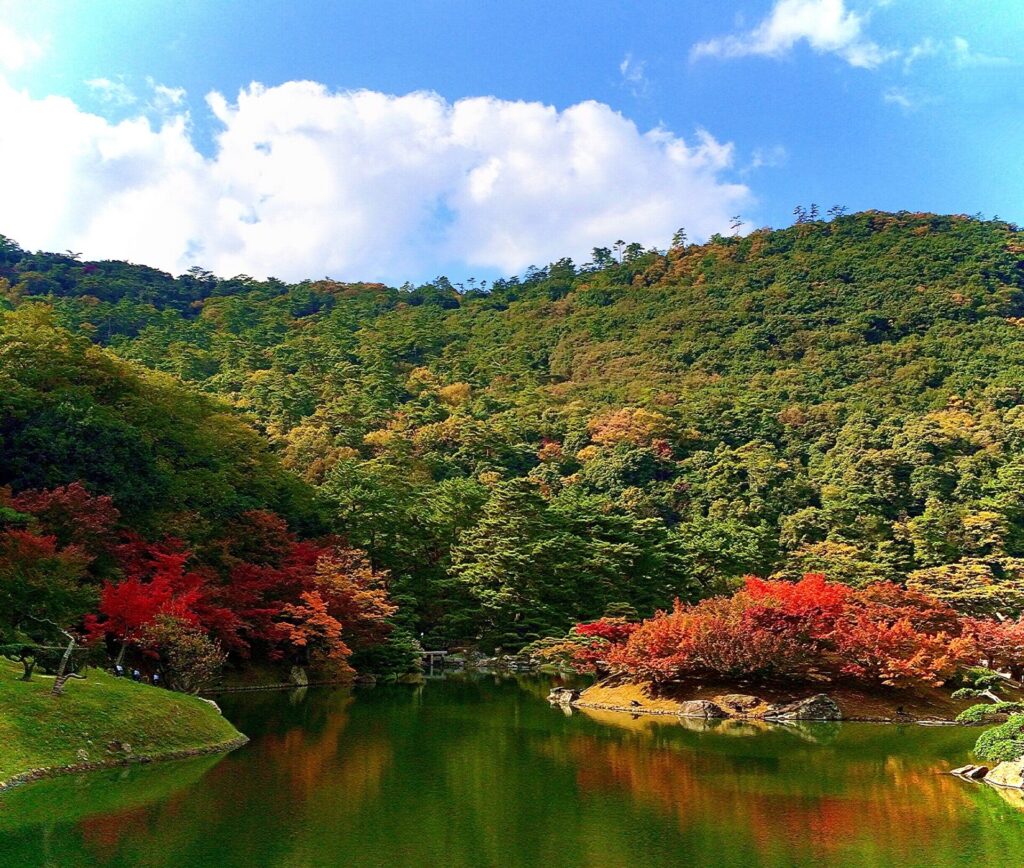
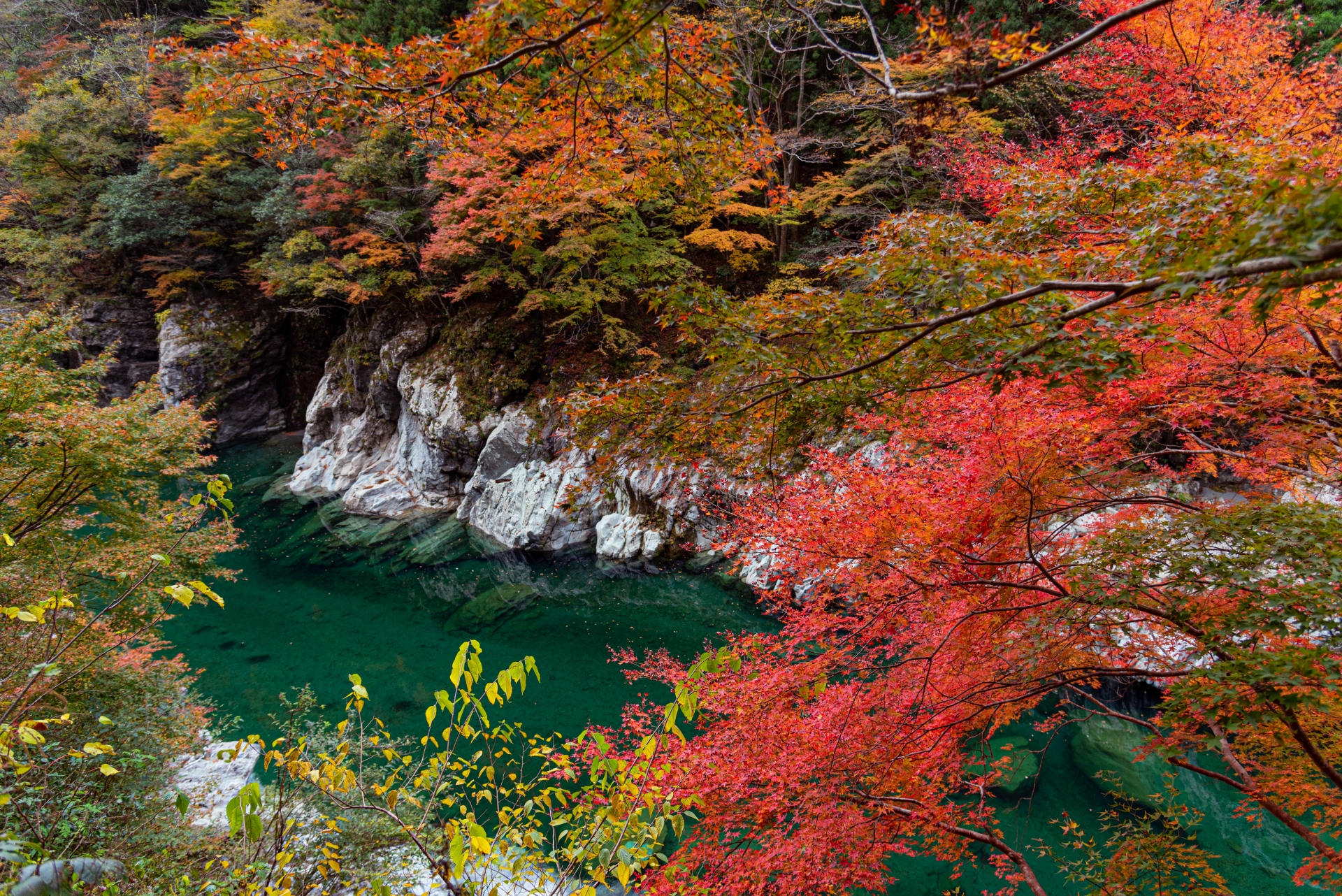
I’ve seen the autumn colours in the Iya Valley and on Miyajima, and both are worth timing a trip for. Recent warm autumns have pushed the peak later, so check a leaf forecast before you go. See Autumn Leaves in Setouchi.
What’s the single best month?
For comfort, early November or May. For festivals, August.
Is it worth visiting in the rainy season?
Yes, if your dates are fixed — just pack an umbrella and have indoor backups like museums.
Does it snow in Setouchi?
Rarely on the coast. Mountain areas do get snow in winter.