Shimanami Kaido: Bicycle or Car? A Local's Honest Comparison (Plus the Ferry Option)
Kai
Setouchi Notes
Quick answer: Michi-no-eki are Japan’s roadside stations: free 24-hour parking and toilets, plus shops selling local food. There are about 1,230 nationwide, 91 in Shikoku. Resting or napping in your car is fine; using them as a campsite isn’t — no tables and chairs, cooking, generators or multi-night stays. If you want to sleep in your car properly, use an RV Park (about ¥2,000–5,000 a night).
If you’re driving around Setouchi, you’ll stop at roadside stations again and again. They’re where I like to take a break on long drives — and where I’d send any visitor who wants to taste local produce without hunting for shops. I’ve also rested overnight in my car at a roadside station on a road trip, so I’ll explain how to do that the right way.
Michi-no-eki (道の駅, “road station”) are rest stops on ordinary roads — Japan’s answer to motorway service areas, but run by local towns. The first 103 opened in 1993; today there are 1,234 (September 2026), including 91 in Shikoku.
Every station must offer:
Many also have EV chargers, playgrounds, observation decks or even hot springs.
This is the question every road-tripper asks, and the honest answer is: you can rest, but it isn’t a campsite.
The Ministry of Land, Infrastructure, Transport and Tourism (MLIT), which registers the stations, says they are rest facilities: taking a nap in your car to recover from tiredness is fine — they exist partly to prevent accidents — but it asks people not to use the car parks “for the purpose of staying overnight”. There’s no national time limit; each station sets its own rules, so always follow the signs.
In practice, a tired driver sleeping in their car is accepted. What causes problems — and has led some stations to ban long stays — is camping behaviour:
A simple rule of thumb: arrive late, keep everything inside the car, leave early, buy something from the shop, and take your rubbish with you.
If you want to spend the night in your car (or a campervan), use an RV Park — car-camping sites certified by the Japan RV Association. There are over 700 nationwide and the number is growing fast. Many are at roadside stations, hot springs or temples.
An RV Park must have:
Typical cost: ¥2,000–5,000 per car per night. Some need a reservation.
Examples on a Setouchi road trip:
| Area | RV Park |
|---|---|
| Shimanami Kaido (Setoda) | RV Park Setoda Sunset Beach |
| Shimanami Kaido (Omishima) | RV Park Shimanami Kaido Omishima |
| Naruto | RV Park at Naruto Tennen Onsen Aratae-no-Yu |
| Pilgrimage route | O-henro RV Park at Anrakuji (Temple 6) |
| Kagawa | RV Park Chichibugahama |
| Western Ehime | RV Parks at several roadside stations (Ozu, Matsuno, Yawatahama) |
These are the ones I’d recommend on a Setouchi road trip.
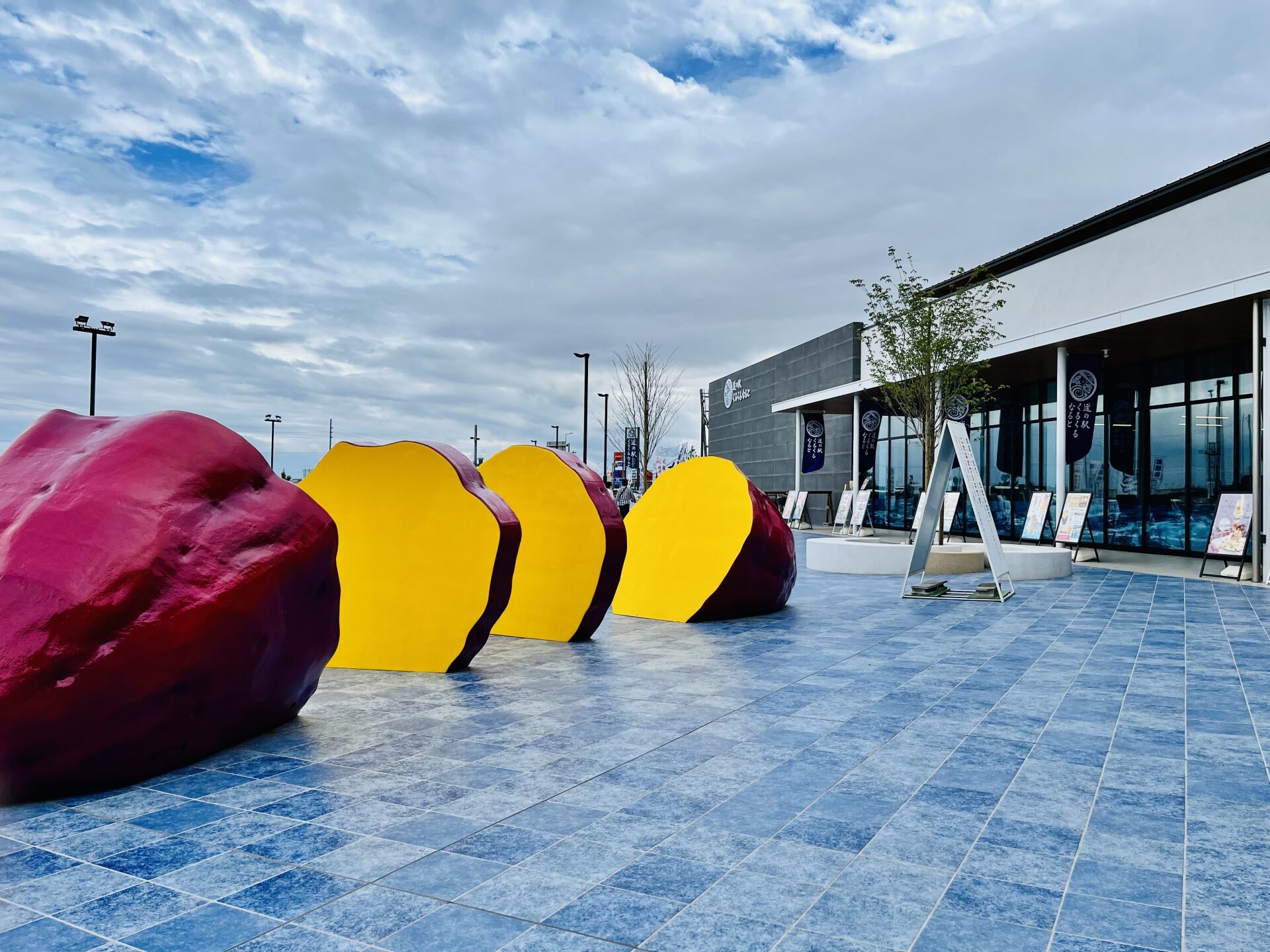
A big, modern station about three minutes from Naruto IC — the perfect first or last stop in Tokushima. It’s built around Naruto kintoki sweet potatoes and Naruto sea bream: sweet-potato soft-serve, desserts, a bakery and seafood restaurants, plus a zipline. Open 9:00–17:00. See What to Eat in Tokushima.
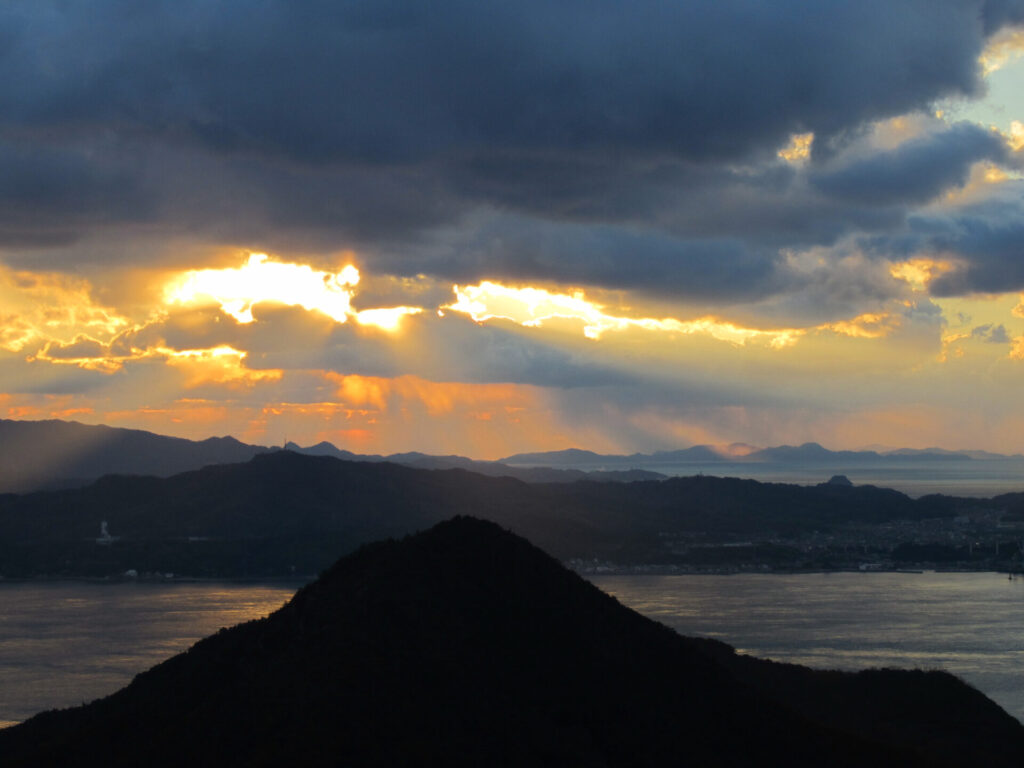
At the southern tip of Awaji, right beside the Onaruto Bridge. Rebuilt and reopened in October 2025, with a rooftop deck looking out over the bridge and the Naruto Strait, the famous Awaji Island burger and local milk soft-serve. Open 9:00–17:00, closed Thursdays; toilets are open 24 hours. The car park is small and fills up on weekends.
In winter (mid-January to mid-March), these have shorter hours and a weekly closing day — check before you go. See Shimanami Kaido: Bicycle or Car?.
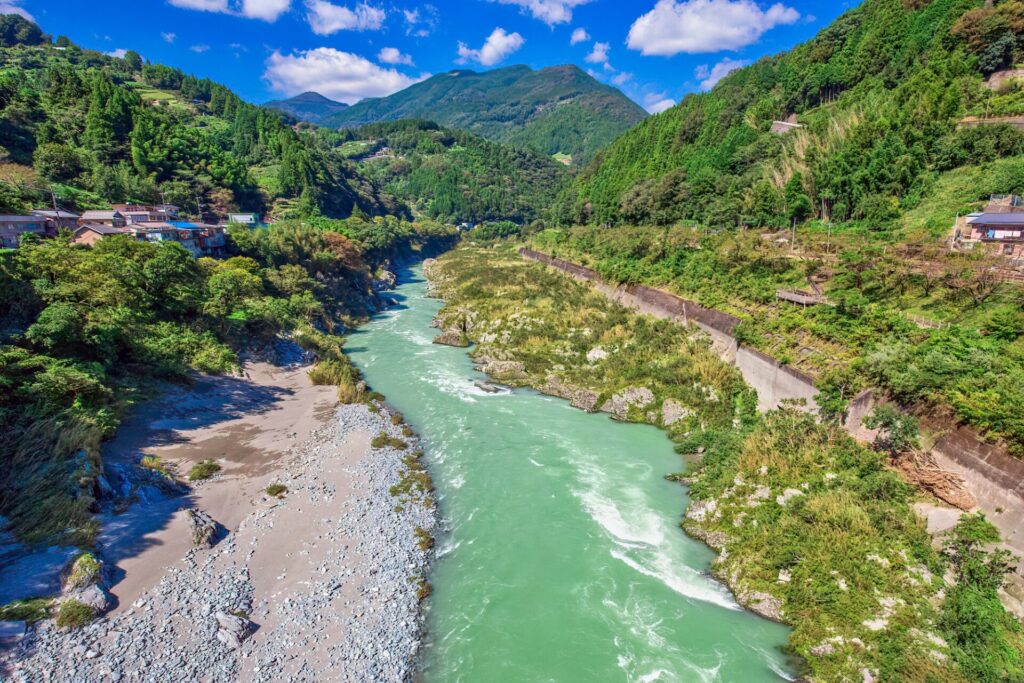
On Route 32 above the Oboke Gorge, with a viewpoint over the Yoshino River and the quirky Yokai House and Stone Museum, about the local monster legends and the gorge’s rocks. Open 9:00–17:00 (closed Tuesdays December–February). The car park is small, so it’s a stop, not an overnight spot. See Iya Valley and Oboke.
Every roadside station has a stamp. The Shikoku Michi-no-eki Stamp Rally book costs ¥300 at any Shikoku station and runs until 31 May 2027. Stamps are only available during opening hours. There’s also a GPS-based digital stamp in the MOBILA app (Japanese).
Campervan rentals with English support are mainly in Kansai. For example, Japan Campers has a depot near Kansai Airport, with English contracts and navigation. From there it’s a short drive over the Akashi-Kaikyo Bridge to Shikoku. I couldn’t find an English-friendly campervan rental based in Shikoku itself. For a normal rental car, see Renting a Car in Shikoku.
Are michi-no-eki free?
Yes — parking and toilets are free, 24 hours a day.
Can I stay for two or three nights?
No. Move on after a rest, or use an RV Park.
Can I charge my phone or car there?
Many stations have EV chargers. Don’t plug into the station’s other outlets without asking.