Hiwasa: Sea Turtles, Yakuoji Temple and the Quiet South Coast of Tokushima
Kai
Setouchi Notes
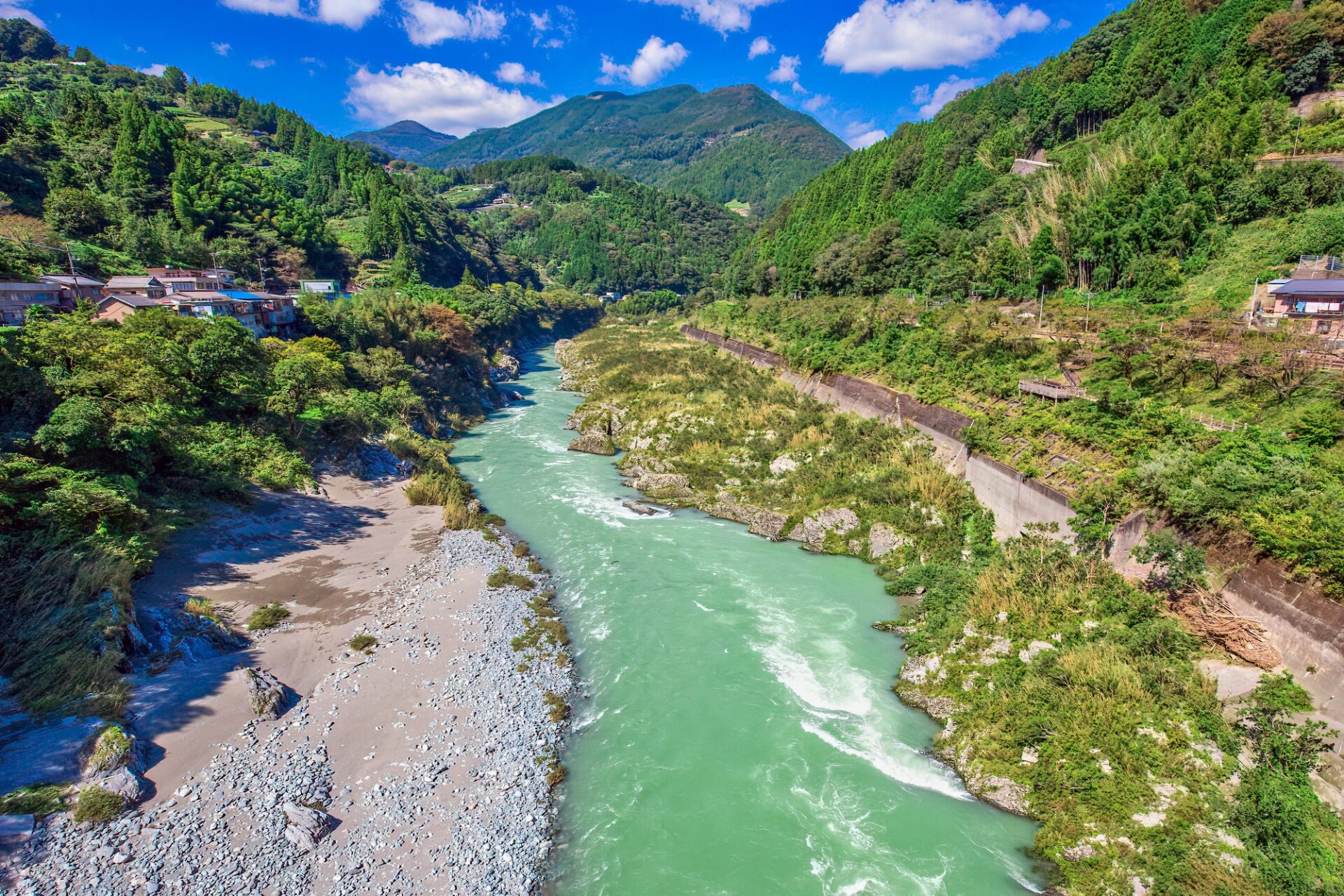
Quick answer: Deep Iya (Oku-Iya / Higashi-Iya) is the remote eastern end of the Iya Valley, about an hour beyond the famous Iya Kazurabashi bridge on narrow mountain roads. The highlights are the Oku-Iya Double Vine Bridges (¥550), the hillside village of Ochiai seen from its viewpoint, the Nagoro scarecrow village, and Mt. Tsurugi, Shikoku’s second-highest peak. You really need a car. The vine bridges and the Tsurugi lift both close on 30 November and reopen in spring. Fill up with fuel before you go, and avoid driving here in winter.
I live in Tokushima, and I’ve driven into Deep Iya myself: I’ve crossed the Oku-Iya Double Vine Bridges, looked across at Ochiai village from the viewpoint, and been up Mt. Tsurugi. It’s remote, and the drive is the hard part. Here’s what to know before you go.
If you haven’t been to the Iya Valley at all, start with my Iya Valley and Oboke guide. This article is for the next step: going deeper.
The roads are narrow and full of curves. Route 439 and the Iya Kaido (Prefectural Road 32) are mountain roads, single-lane in many places, with sharp bends, steep drops and few places to pass. Drive slowly and be ready to reverse to a passing place when you meet another car.
See Driving in Rural Shikoku for more on mountain roads, and Renting a Car in Shikoku.
By bus? It’s possible but hard. Buses go from Oboke Station to Kubo, then a city bus continues to the vine bridges, but beyond Kubo it runs only on weekends and in peak seasons, a couple of times a day.
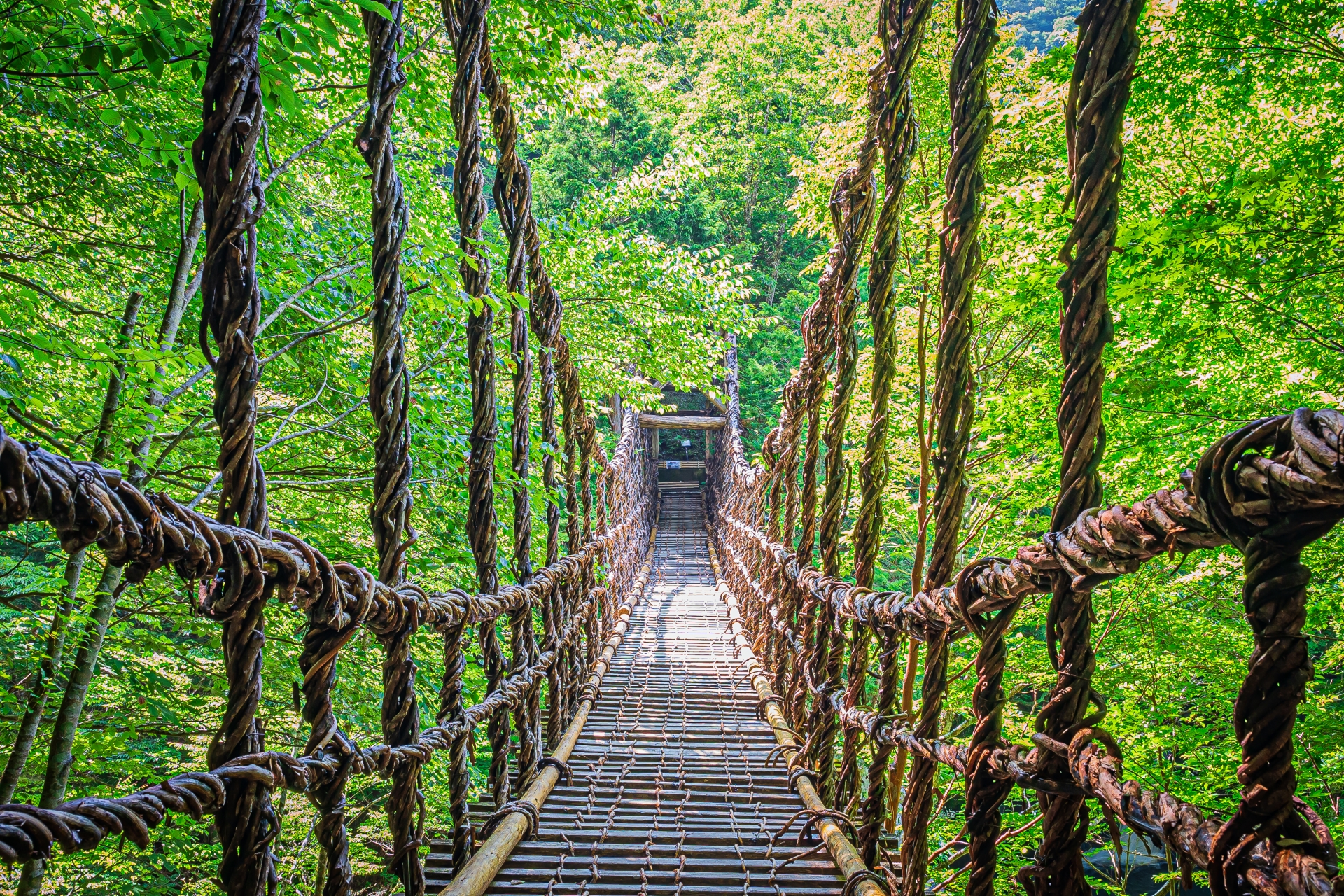
Two bridges woven from vines hang side by side over the river: the larger “male” bridge (otoko-bashi) and the smaller “female” bridge (onna-bashi). Legend says they were built by members of the Heike (Taira) clan who fled into these mountains about 800 years ago.
I’ve crossed them myself. As on any vine bridge, there are gaps between the planks, so watch your step.
| Admission | ¥550 adults, ¥350 elementary school children |
| Open | 9:00–17:00 (8:00–18:00 in July and August) |
| Season | 1 April – 30 November. Closed 1 December – 31 March |
| Parking | About 30 spaces |
| From Iya Kazurabashi | About 1 hour by car |
There’s also a small campsite next to the bridges (no reservations). The old hand-pulled cable cart over the river (yaen) is currently out of use.
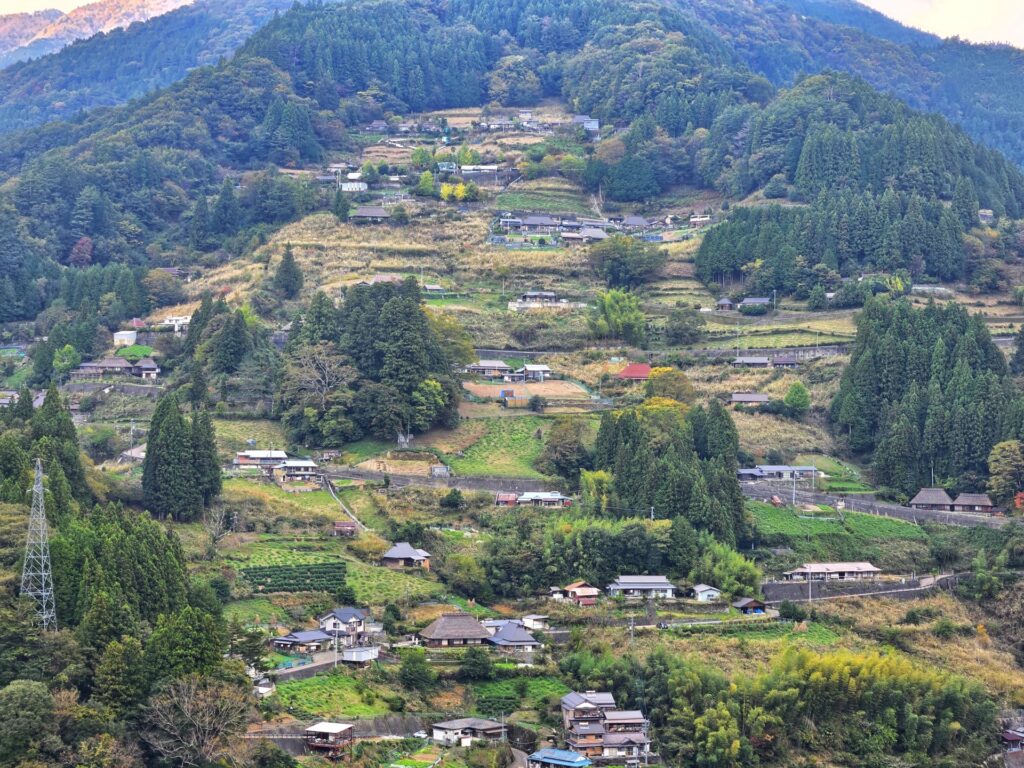
Ochiai is a mountain village whose houses, terraced fields and stone walls climb about 270 metres up a steep slope. It’s a nationally designated preservation district for traditional buildings.
The best view is from the Ochiai Village Viewpoint on the road across the valley, where there’s a small car park. I’ve looked across at the village from there. The village itself has no visitor parking, and people live there, so be respectful if you walk in.
You can also stay in Ochiai: several restored thatched farmhouses are rented out to visitors.
A little further up the road, the hamlet of Nagoro is famous for its life-size scarecrows — more than 350 of them, far more than the number of people who live there. They sit at bus stops, in fields and in the old school, which is open to visitors. It started when a local resident began making scarecrows in the early 2000s.
I haven’t stopped here myself, so I can’t give you first-hand tips, but it’s on the way to the Oku-Iya bridges and admission is free.
Mt. Tsurugi (1,955 m) is the second-highest mountain in Shikoku, at the top of the Iya Valley. I’ve been up the mountain myself. From the Minokoshi car park, a chairlift takes you most of the way up, and a hiking trail continues from the top station to the summit. For the routes, fares and seasons, see Mt Tsurugi Hike.
| Lift season (2026) | 18 April – 30 November |
| Fare | ¥2,300 return, ¥1,300 one way (cash only) |
| Hours | 9:00–16:30 (from 8:00 at busy times) |
| Ride | About 15 minutes, from 1,420 m to 1,750 m |
| Parking | Free car parks at Minokoshi |
It’s much cooler up here than in the valley, even in summer, so bring a jacket.
Iya soba is the local buckwheat noodle: thick, short and rustic, made with little or no wheat flour because wheat doesn’t grow well in these mountains. I think it’s delicious. Look for it at restaurants and roadside stops along the valley.
Also try dekomawashi: skewers of small local potatoes, firm mountain tofu and konnyaku, coated in miso and grilled over charcoal.
Times are approximate; on these roads, everything takes longer than the map suggests.
Staying in the valley makes this trip much easier. Options include hot-spring hotels around Oboke and Nishi-Iya, thatched-farmhouse stays in Ochiai, and Chiiori, a restored 300-year-old farmhouse in Higashi-Iya. See Where to Stay in Tokushima.
When are the Oku-Iya vine bridges open?
From 1 April to 30 November. They’re closed from December to March.
Can I visit Deep Iya without a car?
It’s possible by bus on weekends and in peak seasons, but services are very limited. A car is much easier.
How long does it take from Iya Kazurabashi?
About an hour by car to the Oku-Iya bridges, on narrow mountain roads.
Is it safe to drive in winter?
I wouldn’t. Roads can be snowy and icy, and most sights are closed.
Opening times, fees and seasons checked on the official Miyoshi City, Tokushima Prefecture and Mt. Tsurugi lift websites on 25 October 2026.